(Confidentiel) [puis déclassifié]
- Des ingénieurs en aéronautique de divers pays ont été engagés pendant un certain temps dans la conception, la construction et le vol d'appareils de type aile volante. L'étude des objets volants nécessite, au moins, un bref examen des appareils non-conventionnels existants et proposés dont les configurations, lorsque vues par les non-initiés, pourraient déboucher sur des signalements d'appareils volants étranges. Suit ne description de certains des types les plus significatifs par pays.
- Allemagne. À la fin de la 2nde Guerre Mondiale, les concepteurs d'appareils allemands
avaient de nombreux projets en cours concernant des appareils sans queue qui auraient pu être pris pour des "soucoupes volantes" ou des objets à l'apparence de disque. Ce
que les soviétiques font pour développer ces projets n'est pas clair mais il est envisagé que des études allemandes
sur des ailes delta sans queue ou configurations de ce type sont détenus par l'URSS.
- CHASSEUR ARADO NUIT ET MAUVAIS TEMPS, PROJET I. Il s'agit d'un monoplan à aile longue, sans
queue, avec des ailes en flèche of large root chord, avec un long fuselage étroit
Envergure
60,3 pieds
Longueur
42,6 pieds
Propulsion
1 réacteur turbo HeS O11
Vitesse max. (niveau de la mer)
441 miles/h
Vitesse max. (29 500 pieds)
503 miles/h
- ARADO E 581-4. Un monoplace high-wing sans queue avec un seul réacteur monté dans le fuselage.
Fin and rudder units sont montées au milieu de l'aile entre le fuselage et l'extrêmité de l'aile sur le bord
arrière.
Envergure
29,3 pieds
Longueur
18,4 pieds
Propulsion
Réacteur turbo HeS O11
Vitesse max. (niveau de la mer)
---
Vitesse max. (plafond de service)
---
- GOTHA P 60-A. Ce fut le 1er de la série des chasseurs à réaction P 60. Il s'agit
d'un type d'aile volante et, puisque le pilote et l'observateurs sont couchés, il n'y a pas de canopée
projetante, permettant ainsi une conception particulièrement propre. Les réacteurs sont montés à l'arrère de la
section centrale, un au-dessus et un en-dessous.
Envergure
40 pieds 8 1/2 pouces
Surface d'aile
504 pieds2
Propulsion
2 réacteurs BMW 003 turbo
Vitesse max. (23 000 pieds)
596 miles/h
- HEINKEL P-1080. Il s'agit d'un chasseur monoplace avec une aile en flèche aiguë, ressemblant à
un type d'aile volante, mais ayant un seul aileron et gouvernail sans empennage.
Span
29,2 pieds
Surface d'aile
218 pieds2
No performance estimates are available
- JUNKERS EF-130. Du type aile volante, ce projet fut établi comme bombardier à réaction rapide
et longue portée.
Envergure
78,8 pieds
Surface d'aile
1290 pieds2
Propulsion
4 réacteurs HeS O11 turbo
Vitesse max.
620 miles/h
Autonomie
3700 miles
- ME-329. Il s'agit d'un monoplan mid-wing sans queue propulsé par 2 hélices propulsives avec le
moteur situé centralement dans les ailes de chaque côté du fuselage arrondi trapu.
Envergure
56 pieds
Longueur
25,4 pieds
Vitesse max.
455-465 miles/h
Propulsion
2 moteurs à piston DB
- AILE HORTEN. La ressemblance la plus proche à la configuration estimée des "disques volants"
est representée par l'aile Horten. Le travail sur le Horten 229, un chasseur bi-réacteurs, avait progressé
jusqu'à ses étapes finales à la fin de la 2nde guerre mondiale. Son prototype, un planeur Horten,
monta avec succès jusqu'à une altitude de 14 200 pieds dès 1938, prouvant la solidité de sa conception (figs. 1,
2 et 3)
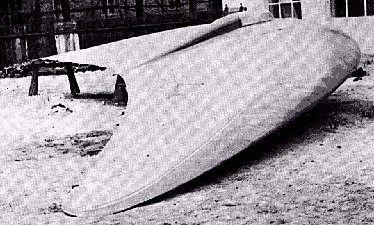
Fig. 1
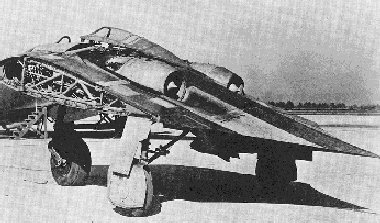
Fig. 2
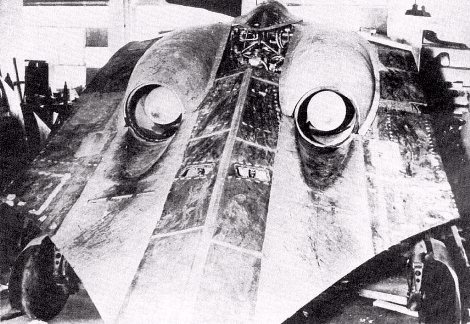
Fig. 3
- CHASSEUR ARADO NUIT ET MAUVAIS TEMPS, PROJET I. Il s'agit d'un monoplan à aile longue, sans
queue, avec des ailes en flèche of large root chord, avec un long fuselage étroit
- Grande Bretagne
- THE ARMSTRONG WHITWORTH. Le AW 52 G, un planeur, et le AW 52, un avion bi-réacteurs, sont des
conceptions britanniques d'appareil sans queue. Les stabilisateurs verticaux sont situés aux extrêmités de
l'aile en flèche (figs. 4 et 5). Les données du 52 apparaissent ci-dessous :
Envergure
90 pieds
Longueur
37 pieds
Vitesse max. (niveau de la mer)
435 noeuds
Vitesse max. (20 000 pieds)
435 noeuds
Vitesse max. (36 000 pieds)
417 noeuds
Autonomie
1300 miles nautiques
Propulsion
2 réacteurs Nene II turbo
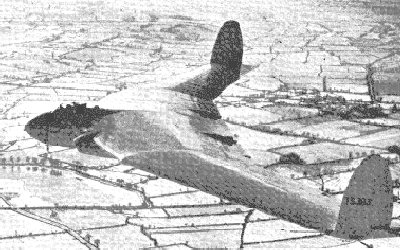
Fig. 4
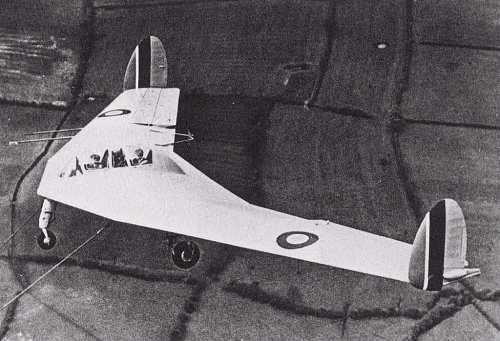
Fig. 5
- THE ARMSTRONG WHITWORTH. Le AW 52 G, un planeur, et le AW 52, un avion bi-réacteurs, sont des
conceptions britanniques d'appareil sans queue. Les stabilisateurs verticaux sont situés aux extrêmités de
l'aile en flèche (figs. 4 et 5). Les données du 52 apparaissent ci-dessous :
- Etats-Unis
- NORTHROP B-35. Il s'agit d'un appareil de type aile volante, propulsé par 4 moteurs à piston
et ayant une envergure de 172 pieds et une longueur de seulement 53 pieds (voir fig. 6)
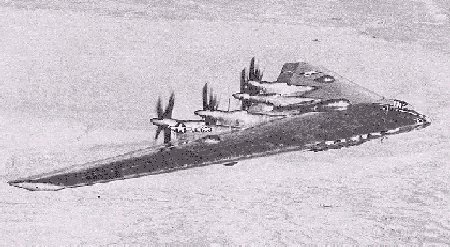
Fig. 6 - NORTHROP YB-49. Propulsé par 8 réacteurs turbo, cet avion est la version à réaction de l'aile volante
Northrop (B-35) (voir fig. 7)
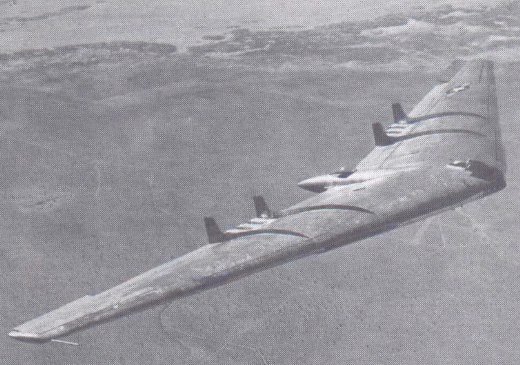
Fig. 7 - CHANCE-VOUGHT XF5U-1. Developpé par Chance-Vought Aircraft, cette conception radicale
promet la réalité de performances à faible et haute vitesses. Propulsé par 2 moteurs R-2000-2, l'avion aura une
vitesse de 40 à 425 miles/h (voir Fig. 8)
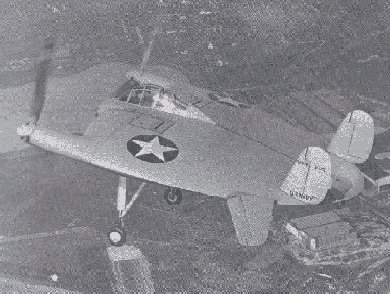
Fig. 8 - MONOPLAN SANS QUEUE ARUP. Jane's "All The World's Aircraft" (édition de 1935) décrit cet avion
comme
une machine biplace avec un moteur LeBlond 70 h.p... Il a une aile à ratio d'aspect élevé avec straight leading-edge and built in nacelle...
Dans la forme plane, l'aile est presque semi-circulaire.
Un film de l'Air Force "Aeronautical Oddities", montre cet avion en vol à South Bend (Indiana), qui dans certaines attitudes semble identique à la photographie incluse en Annexe "C" ; comme en figure 4. Bien que l'on pense que ARUP Manufacturing Co. n'existe plus, il est possible que des modèles ultérieurs à celui-ci où des appareils civils américains semblables aient pu être observés.
Envergure
22 pieds
Longueur
19 pieds
Propulsion
1 moteur LeBlond
Vitesse max.
86 miles/h
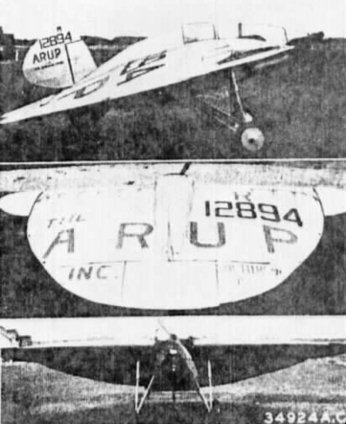
Fig. 9
- NORTHROP B-35. Il s'agit d'un appareil de type aile volante, propulsé par 4 moteurs à piston
et ayant une envergure de 172 pieds et une longueur de seulement 53 pieds (voir fig. 6)
- Bien que l'annexe "D" se vise pas à expliquer de manière concluante le phénomène des "Soucoupes Volantes", la possibilité que des appareils de type non conventionnel soient la cause de signalements de disques volants ne soit pas être sous estimée.